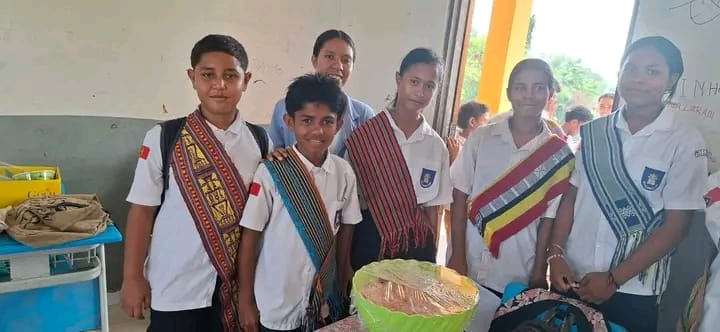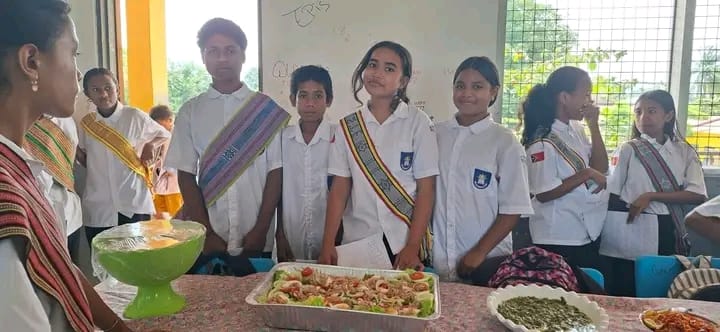
DILI, October 10, 2026 — As part of the implementation of the curricular reform for the third cycle of basic education, 7th-grade students at the Farol Central Basic School (EBC Farol) held a “Family Tradition Gastronomic Fair” on October 10. The event was part of a project for the Portuguese Language course, developed throughout the third academic term and involving five classes.
This initiative serves as a practical application of the new pedagogical guidelines set forth in the National Basic Curriculum for the third cycle of basic education, which began implementation in the 2026 academic year, starting with the 7th grade. The reform, aligned with the educational policies of the IX Constitutional Government, seeks to foster more participatory learning, develop essential competencies, and promote Timorese identity and culture.
Guided by Portuguese language teacher and trainer Rosa Maria Saldanha, the activity also benefited from the collaboration of three interns from the National University of Timor Lorosa’e (UNTL)—Esperança, Ligete, and Carlota. The project was based on Lessons 23 and 29 of the 7th-grade textbook, enabling students to apply what they had learned to real-life, everyday situations.
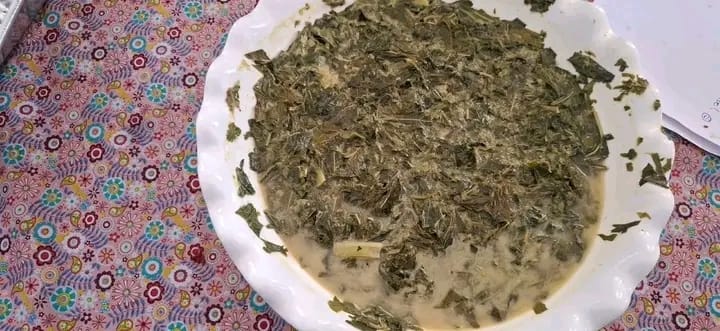
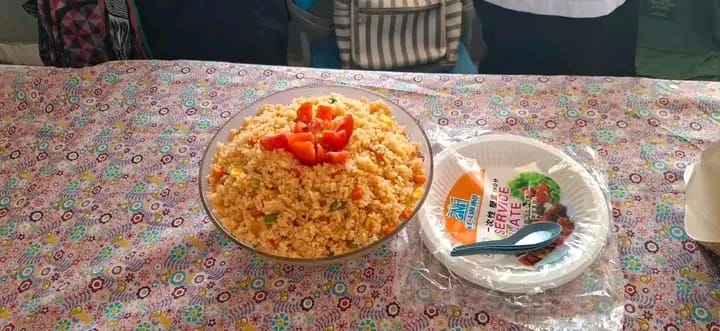
The project was carried out in three phases. In the first, students researched traditional family recipes and drafted instructional texts, identifying ingredients and describing preparation methods. In the second phase, they organized themselves into groups to prepare the dishes at home. In the third phase, they presented the food at school and explained—in Portuguese—the names of the dishes, their ingredients, and how they were prepared. Among the proposals presented, highlights included chilled fruit salad, coffee and orange puddings, moringa tea, ginger tea, piri-piri (spicy condiment) made with cassava leaves, boiled yam with lemongrass and cinnamon, seaweed-based dishes, sautéed rice, the traditional katupa, tuna and egg salads, and piri-piri prepared with dried small fish (esparetas).
Teacher Rosa Maria Saldanha expressed great satisfaction with the pedagogical strategy adopted, viewing it as an innovation compared to the practices she was familiar with under the previous curriculum, and as better suited to the children’s learning needs. This approach allows students to take an active role in constructing their own knowledge, learning through research, experimentation, collaboration, and the practical application of school content.
The activity thus illustrates how curricular reform can translate into concrete learning experiences within the classroom and the school community. Rather than being limited to the theoretical acquisition of knowledge, students are encouraged to investigate, produce, communicate, and complete tasks in contexts that closely mirror their own reality.
In the field of Portuguese language studies, researching and writing down the recipes contributed to the development of reading comprehension and written expression skills, while identifying ingredients and describing procedures helped expand the students’ vocabulary. Presenting the dishes also fostered oral expression, the organization of ideas, and the ability to communicate with clarity.
Beyond linguistic learning, the project promoted collaborative work and the valuing of knowledge passed down within families. By integrating traditional gastronomy into the teaching and learning process, EBC Farol demonstrated how pedagogical innovation can go hand in hand with the preservation of Timorese cultural identity. This experience serves as an example of how the guidelines for curricular reform in basic education can be implemented through participatory, contextualized, and meaningful activities for students, strengthening the connection between school, family, and community.