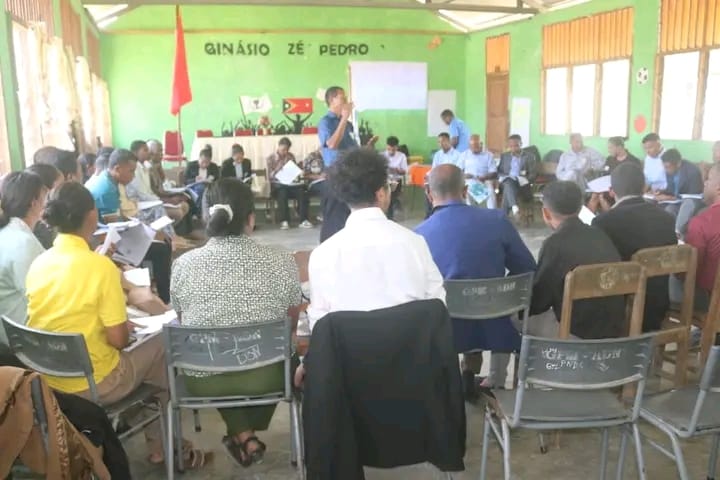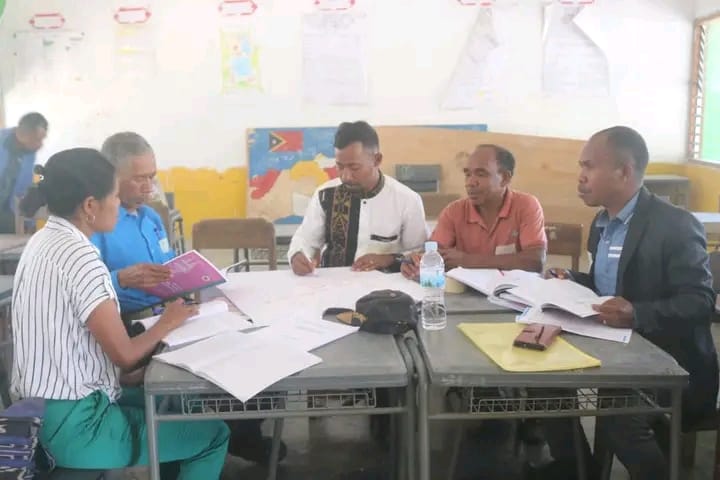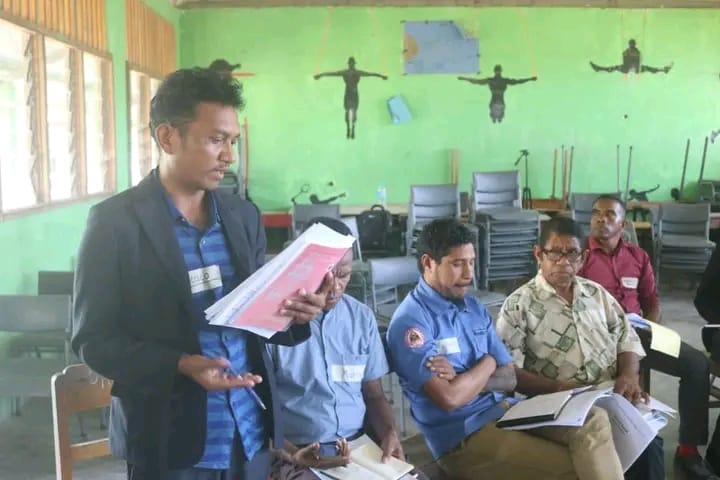
Ermera, October 2, 2026 — The Ministry of Education continues to conduct training on the curricular reform for 8th-grade teachers in the Municipality of Ermera, focusing on the differences between the old and new curricula—specifically regarding teaching and learning methods.
Agapito Marques Xavier, a national trainer in Social Sciences at INFORDEPE, explained that the old curriculum was primarily based on traditional instruction, where the teacher was the center of the learning process. In contrast, the new curriculum is rooted in competency development, placing the student at the center of learning and defining the teacher’s role as that of a guide, mediator, and facilitator.
Under the new curriculum, students have the opportunity to participate actively through debates, group work, practical activities, and research projects, thereby developing critical thinking, creativity, communication, and problem-solving skills.
Assessment has also evolved, shifting from an emphasis on final tests or exams toward continuous assessment, designed to track student progress. Teaching materials have likewise become more diverse, incorporating books, games, projects, and technology.
In the Social Sciences subject, the new curriculum utilizes both Tetum and Portuguese, covering content ranging from History and Geography to Civic Education and Human Rights.
Anita Gusmão, a teacher at EBF No. 123 in Manulete, Hatulia A, who participated in the training, noted its importance in providing a clear understanding of the respective roles of teachers and students within the new curriculum. The Phase III training took place over three days, from September 30 to October 2, 2026, with the participation of 131 8th-grade teachers: 35 in Human Fraternity, 41 in Social Sciences, and 37 in the Tetum language.