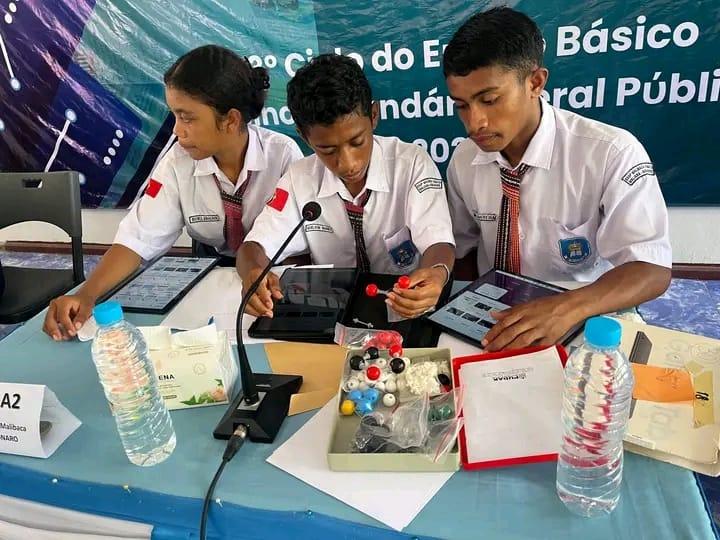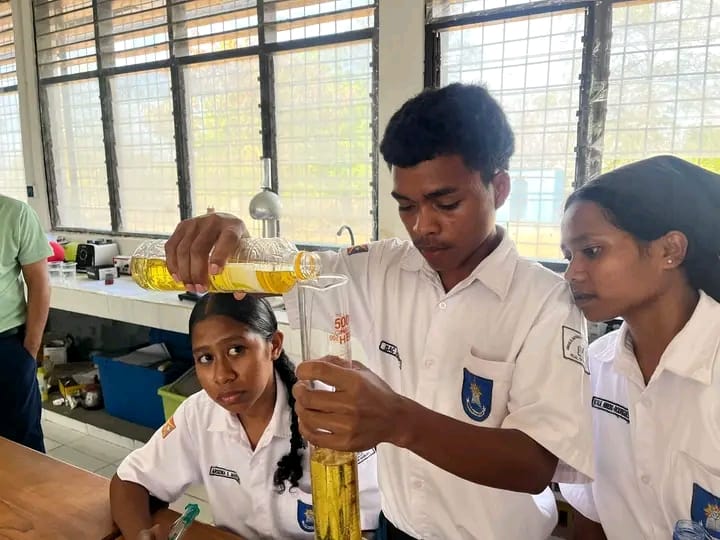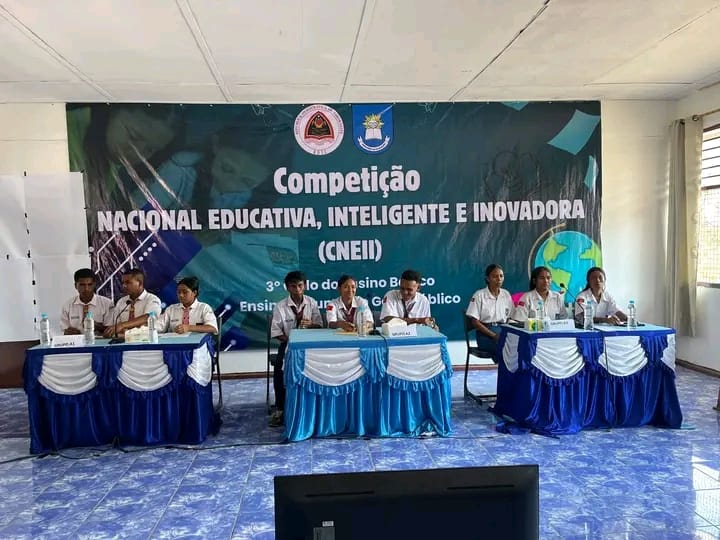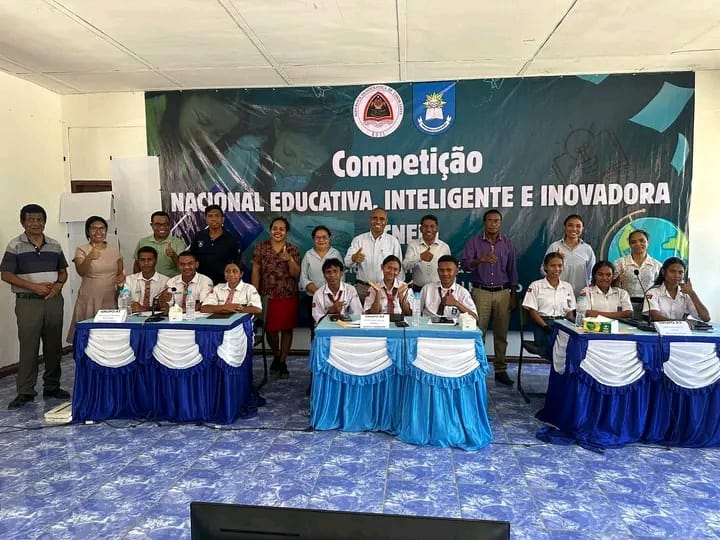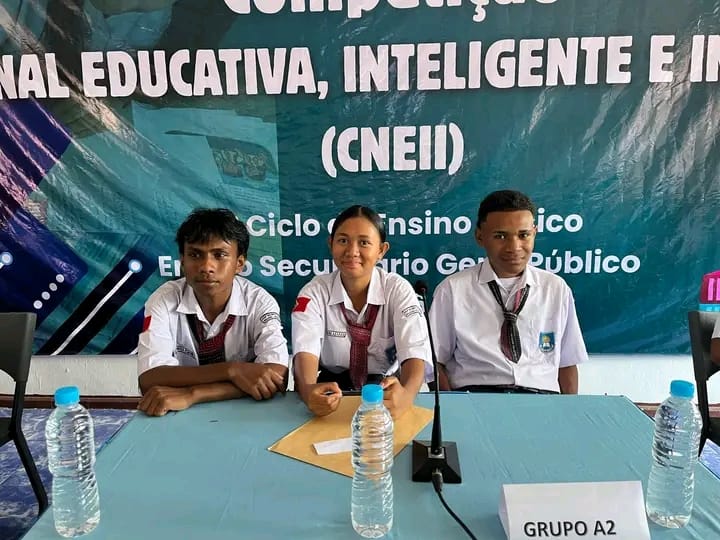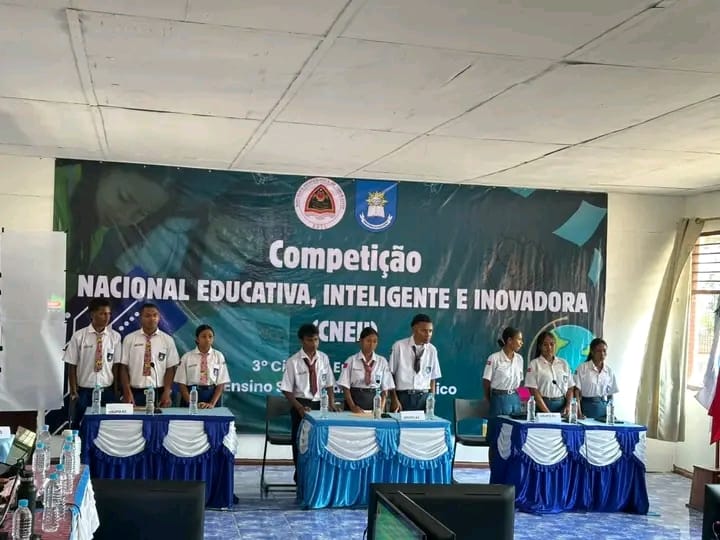
Liquiçá, November 9, 2026 – The Ministry of Education—represented by the National Director of Basic Education, Ms. Estelita Soares, and the Vice-President of the Office for Research, Development, Monitoring, and Evaluation (GPDMA) at INFORDEPE, Mr. Sebastião de Oliveira—presided over the opening ceremony of the National Educational, Intelligent, and Innovative Competition (CNEII). The competition is aimed at students in the 3rd cycle of Basic Education and those in public General Secondary Education.
The event took place at the Hu Iso Lara Iso General Secondary School (ESG), located in the Administrative Post of Liquiçá, in the Municipality of Liquiçá.
This competition serves as a platform that offers students the opportunity to showcase their knowledge, skills, creativity, and capacity for innovation through educational, competitive activities.
In her remarks, the National Director of Basic Education, Ms. Estelita Soares, stated that the 2026 CNEII is an educational initiative organized with the goal of fostering a culture of healthy competition and strengthening the capabilities of students in Basic Education and public General Secondary Education. “The 2026 National Educational, Intelligent, and Innovative Competition (CNEII 2026) is an educational initiative aimed at fostering a culture of healthy competition, while developing students’ intellectual capabilities, critical thinking, creativity, innovation, and cooperation. This initiative engages students from public basic and general secondary education through various stages of competition, offering them opportunities to demonstrate their knowledge, skills, and abilities within their respective areas of study,” stated the National Director of Basic Education.
Meanwhile, the Vice-President of the GPDMA at INFORDEPE, Mr. Sebastião de Oliveira, emphasized that education should not be limited to the memorization of content; rather, it should prioritize understanding, critical thinking, creativity, and the application of knowledge to solve societal problems.
“It is important to always keep in mind that the true value of education is not measured solely by the amount of knowledge we manage to memorize, but also by our capacity to understand, question, critically analyze, and apply that knowledge in the search for solutions to the challenges faced by society,” the GPDMA Vice-President underscored.
This initiative also serves as an incentive for students to continue learning, collaborating, and seeking creative solutions—thereby contributing to the improvement of the quality of education and the building of a better future for Timor-Leste.